The Firebase Emulator Suite provides a local environment for developers to test services like Firestore, Authentication, and Cloud Functions without impacting production data or incurring costs. By replicating cloud resources on a local machine, the suite enables faster development cycles, offline testing, and safe debugging of application logic.
Implementation involves installing the Firebase CLI, initializing specific service emulators, and configuring the application to connect to local ports. This workflow allows for rigorous security rule validation and data management through a dedicated web dashboard. Exporting and importing local data ensures consistent testing environments across development sessions.
Testing directly against a live Firebase project can be risky and expensive.
A simple bug may:
- Delete production data
- Trigger Cloud Functions unexpectedly
- Send unwanted push notifications
- Increase Firebase billing
To solve these problems, Firebase provides the Firebase Emulator Suite, a collection of local development tools that allow developers to test Firebase services safely on their own machines.
In this guide, you’ll learn how to install, configure, and use Firebase Emulator Suite effectively in 2026.
What Is Firebase Emulator Suite?
Firebase Emulator Suite is a set of local emulators that replicate Firebase services on your computer.
Instead of connecting to cloud resources, your application communicates with locally running Firebase services.
Benefits include:
- Faster development cycles
- No production risks
- No Firebase usage costs during testing
- Offline development support
- Safe debugging and experimentation
Supported Firebase Services
| Firebase Service | Supported |
|---|---|
| Cloud Firestore | ✅ |
| Authentication | ✅ |
| Cloud Functions | ✅ |
| Realtime Database | ✅ |
| Cloud Storage | ✅ |
| Pub/Sub | ✅ |
| Eventarc | ✅ |
Why Use Firebase Emulators?
Without emulators:
App → Firebase Cloud
Every action affects your live Firebase project.
With emulators:
App → Local Emulator
Your production environment remains untouched.
Installing Firebase CLI
Before using Firebase Emulator Suite, install Node.js on your system.
Then install Firebase CLI:
npm install -g firebase-tools
Verify installation:
firebase --version
Login to Firebase
Authenticate your Firebase account:
firebase login
A browser window will open where you can sign in using your Google account.
Initialize Emulator Suite
Navigate to your Firebase project directory and run:
firebase init emulators
Firebase will ask which services you want to emulate.
Typical selection:
◉ Firestore
◉ Authentication
◉ Functions
◉ Storage
Starting Firebase Emulators
Launch all configured emulators:
firebase emulators:start
Example output:
Firestore Emulator: localhost:8080
Auth Emulator: localhost:9099
Storage Emulator: localhost:9199
Firebase Emulator UI
The Emulator Suite includes a powerful web dashboard.
Open:
http://localhost:4000
The dashboard allows you to:
- Inspect Firestore data
- Create and manage users
- Monitor Cloud Functions
- View requests and logs
- Debug application behavior
Using Firestore Emulator
Android Example
Firebase.firestore.useEmulator(
    "10.0.2.2",
    8080
)
Web Example
connectFirestoreEmulator(
  db,
  "localhost",
  8080
);
All Firestore operations will now remain local.
Using Authentication Emulator
Connect your application to the local Authentication Emulator.
connectAuthEmulator(
  auth,
  "http://localhost:9099"
);
You can safely test:
- User registration
- Email/password login
- Password reset flows
- Anonymous authentication
- OAuth integrations
No real users are affected.
Using Cloud Functions Emulator
Run only Functions:
firebase emulators:start --only functions
Benefits:
- Faster development
- No deployments required
- Easier debugging
- Reduced cloud costs
Example Function:
exports.helloWorld =
functions.https.onRequest(
(req, res) => {
  res.send("Hello World");
});
Using Storage Emulator
Connect Firebase Storage to the local emulator:
connectStorageEmulator(
  storage,
  "localhost",
  9199
);
Useful for testing:
- Image uploads
- Video uploads
- User profile photos
- PDF storage
All files remain on your local machine.
Importing and Exporting Emulator Data
Export Data
firebase emulators:export ./backup
Import Data
firebase emulators:start --import=./backup
This is extremely useful for:
Testing Security Rules Locally
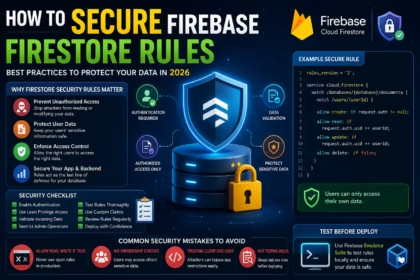
One of the biggest advantages of Emulator Suite is local security rule testing.
Example Firestore Rules:
rules_version = '2';

service cloud.firestore {
 match /databases/{database}/documents {

  match /users/{userId} {
   allow read, write:
   if request.auth != null;
  }

 }
}
You can verify permissions before deploying to production.
Working Offline
Firebase Emulators run entirely on your machine.
Advantages include:
- No internet dependency
- Faster local testing
- Reliable development environment
- Perfect for travel or unstable networks
Default Emulator Ports
| Service | Default Port |
|---|---|
| Emulator UI | 4000 |
| Firestore | 8080 |
| Authentication | 9099 |
| Realtime Database | 9000 |
| Cloud Functions | 5001 |
| Storage | 9199 |
These ports can be customized inside:
firebase.json
Recommended Development Workflow
Step 1
firebase emulators:start
Step 2
Launch your application.
Step 3
Test:
- Authentication
- Firestore operations
- Storage uploads
- Cloud Functions
Step 4
Fix bugs locally.
Step 5
Deploy only after successful testing.
Common Mistakes
Accidentally Connecting to Production
Always verify emulator connections are configured.
Without emulator connection code, your application may connect to production services.
Forgetting Authentication Emulator
Many Firestore security rules depend on authentication.
Use both:
- Firestore Emulator
- Authentication Emulator
for realistic testing.
Not Saving Emulator Data
Without exporting data:
firebase emulators:export
All local test data will be lost when emulators stop.
Firebase Emulator Best Practices
- Test security rules locally before deployment
- Use separate development environments
- Export emulator data regularly
- Combine Firestore and Authentication emulators
- Debug Cloud Functions locally
- Avoid testing destructive operations in production
Frequently Asked Questions
Is Firebase Emulator Suite Free?
Yes. Local emulators do not generate Firebase billing charges.
Can Firestore Run Offline?
Yes. The Firestore Emulator runs entirely on your machine.
Does Emulator Suite Affect Production Data?
No. All data remains local unless your application is configured incorrectly.
Can I Test Cloud Functions Locally?
Yes. Cloud Functions Emulator supports local execution and debugging.
Should Every Firebase Developer Use Emulators?
Absolutely. It improves development speed, safety, and testing reliability.
Final Verdict
Firebase Emulator Suite is one of the most valuable tools available to Firebase developers.
Instead of risking production data or generating unnecessary costs, you can safely test:
- Cloud Firestore
- Authentication
- Cloud Functions
- Storage
- Security Rules
Whether you’re building Android apps, Unity games, or web applications, Firebase Emulator Suite should be a core part of your development workflow.