

When I first heard about dropshipping, it sounded too good to be true. You sell products without buying stock, without a warehouse, and without packing a single box. I came across it while looking for ways to earn online besides blogging and app development, and I wanted to know if it was real or just another hyped-up idea.
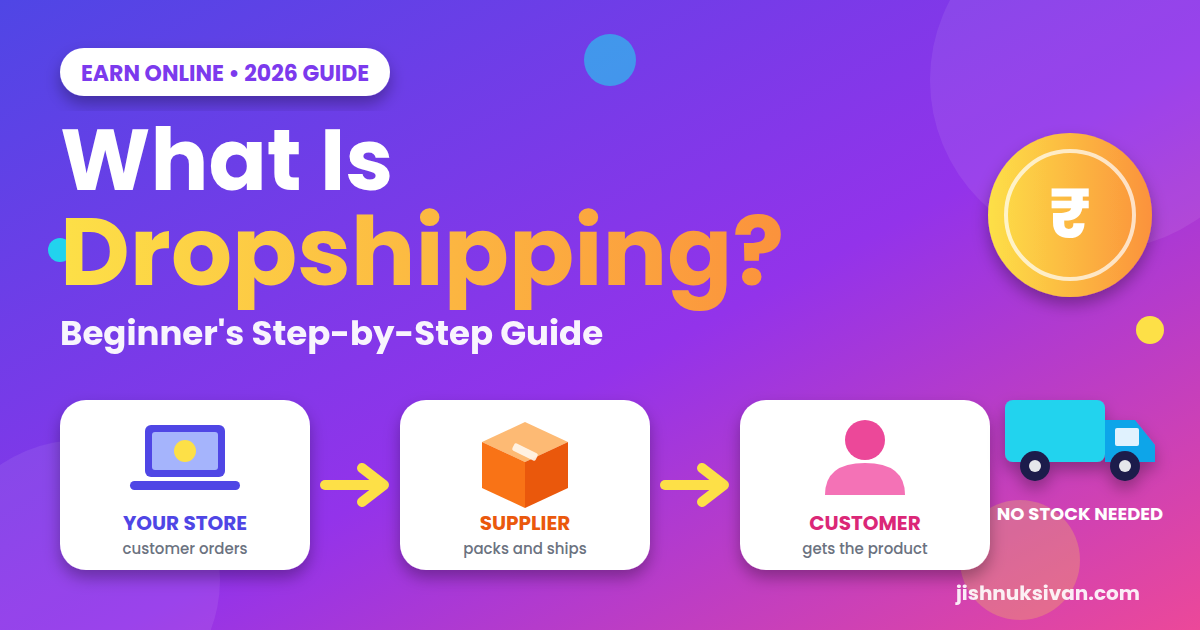
So, what is dropshipping? In simple words, it is a way of running an online store where you never keep the products yourself. When a customer orders, a supplier packs and ships the item directly to them. You handle the store, the marketing, and the customer, and the supplier handles the product.
After reading about it properly, here is what I learned. Some of it is good news, and some of it nobody mentions in those “earn lakhs from your phone” videos. I will go through how it works, the real costs, how to start step by step, and the mistakes I would avoid.
What Is Dropshipping?
In a normal shop, you buy products in bulk, store them, and ship them yourself. If the products do not sell, that money is stuck. In dropshipping, you skip all that.
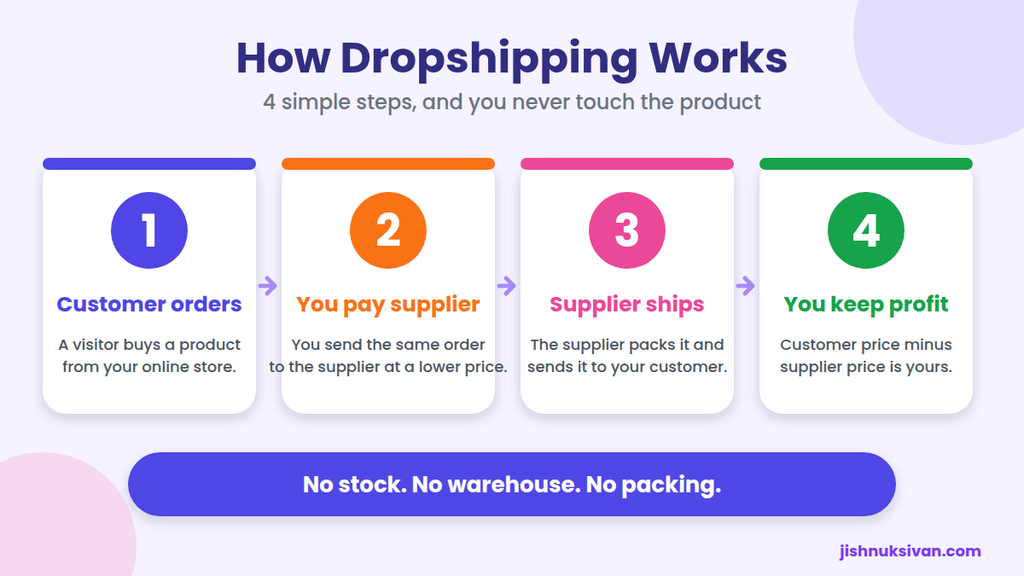
- You list a product on your online store.
- A customer orders it and pays you.
- You place the same order with a supplier, paying their lower price.
- The supplier ships it directly to your customer.
Your profit is the difference between what the customer paid and what the supplier charged. You never touch the product.
Let us take a simple example. Imagine you sell a phone stand on your store for ₹599. A customer orders it, and you pay your supplier ₹300 for the same item along with the delivery address. The supplier ships it, and the ₹299 difference is what is left for you, before you subtract your other costs like ads and payment fees. That last part is important, and I will come back to it.
Why People Like Dropshipping
There are real reasons why this model became so popular, especially with students and people who have a job and want a side income.
- Low starting cost. You do not buy inventory upfront, so you can start with a small budget compared to a normal shop.
- Work from anywhere. A laptop and internet are enough. You can manage orders from home.
- Easy to test ideas. If a product does not sell, you remove it from your store and lose nothing but time.
- You learn real skills. Marketing, customer support, and basic selling are useful even if you stop dropshipping later.
The Part Nobody Talks About
This is where most beginners get surprised. Dropshipping is easy to start, but it is not easy to make profitable.
- Profit margins are small, often 10 to 30 percent before ad costs.
- You do not control quality or shipping time. If the supplier is late, your customer blames you, not them.
- Competition is high. Thousands of people sell the same viral products, so you are not the only one.
- Ads cost money. Most stores need paid ads to get customers, and beginners often lose money while learning.
- Returns and refunds are your problem. If a customer wants a refund, you often have to pay it even if the supplier will not.
Honestly, what surprised me most was how little the “no investment” claim means in practice. Yes, you do not buy stock, but you still pay for the store, a domain, apps, and most of all advertising. Many people spend more on ads in the first month than they earn.
What worries me is the trust side of it. You are taking money from a customer for something you have never held in your hands. If the product arrives late or looks different from the photos, you are the one answering angry messages. That is why I would never sell anything without ordering a sample first.
Where Does the Money Actually Go?
To show how thin the profit can be, here is a simple example. Say you sell one product for ₹999. The product costs ₹450 from the supplier, shipping is ₹80, the payment gateway takes about 2.5 percent (around ₹25), and you spend ₹250 on ads to get that one sale. That leaves only ₹194, which is about 19 percent of the selling price.
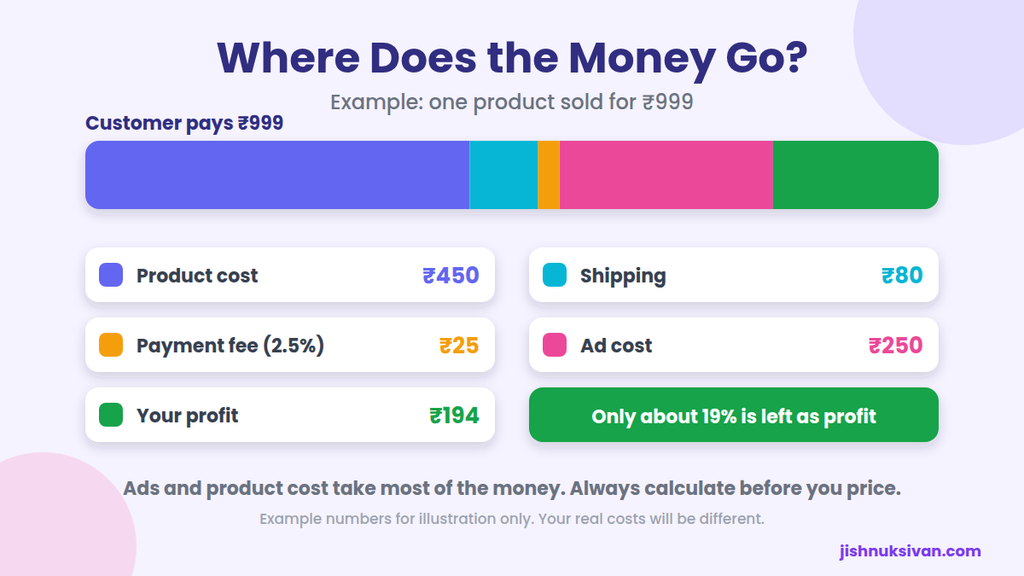
These numbers are only an example, but the lesson is real. If you set your price without counting ads and fees, you can make a sale and still lose money. Always calculate everything before you decide a price.
What You Need Before You Start
You do not need much, but you do need the basics in place.
- A laptop or a good phone, and a stable internet connection
- A small budget for the store, a domain, and testing (more if you plan to run ads)
- Time every day to handle orders, messages, and marketing
- Patience, because most stores take weeks or months before they see steady sales
How to Start Dropshipping, Step by Step
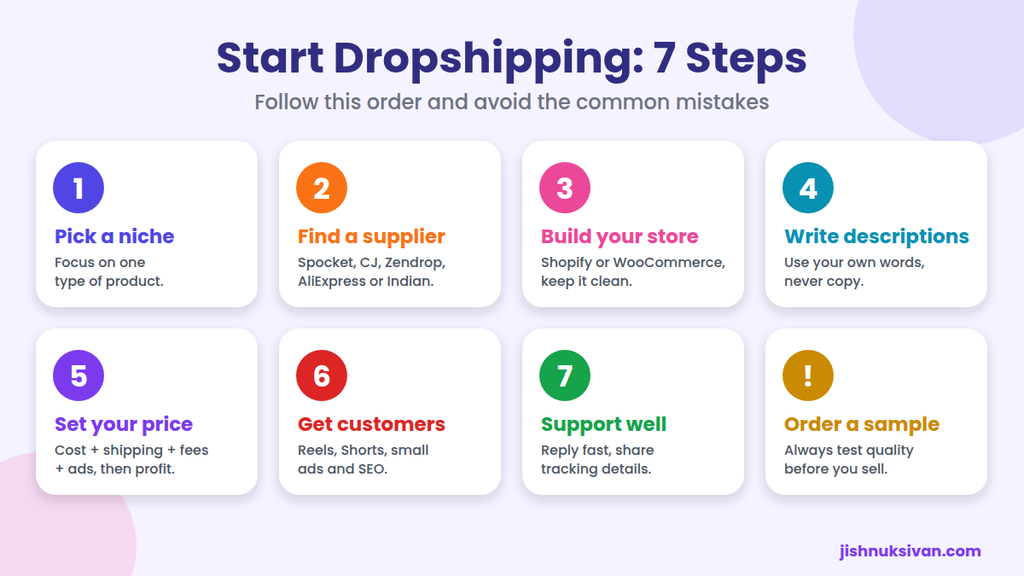
If you decide to try it, this is the order I would follow. Taking each step properly is better than rushing to launch.
1. Pick a niche
Do not try to sell everything. Choose one area, such as pet accessories, phone gadgets, or fitness gear. A focused store looks more trustworthy and is easier to market, because you know exactly who your customer is. Pick something you understand or are at least curious about, since you will be reading and writing about it a lot.
2. Find a reliable supplier
Popular options are Spocket, Zendrop, CJ Dropshipping, and AliExpress. For India, look at Indian suppliers too, because shipping from China can take weeks, and customers here expect faster delivery. Whichever you choose, order a sample first to check quality, packaging, and delivery time. Also read the supplier’s return policy before you commit.
3. Build your store
Shopify is the easiest option for beginners. If you already know WordPress, WooCommerce works well and costs less in the long run. Keep the design clean and fast, and make sure you have a contact page, a refund policy, and a shipping policy. These pages build trust, and customers do check them before paying.
4. Write your own product descriptions
Do not copy the supplier’s text. It looks cheap, and Google ignores duplicate content, so your store will not rank. Write in your own words: what the product is, who it is for, what problem it solves, and what is included. Use clear photos, and if you can, add a short video.
5. Set your prices properly
Add up the product cost, shipping, payment gateway fees (around 2 to 3 percent), and ad cost. Only then decide your price. Check what competitors charge, but do not compete only on being the cheapest, because that usually kills your margin.
6. Get your first customers
Start small: Instagram Reels, YouTube Shorts, or a small Meta ads budget. Test a few products with a low daily budget and see which one gets clicks and orders. Free traffic through blog posts and SEO is slower, but it lasts and does not stop when you stop paying.
7. Handle customers well
Reply fast, give tracking details, and be honest about delivery times. If something goes wrong, tell the customer early instead of hiding it. Good support is what separates a real store from a scam site, and it is also how you get repeat customers.
Mistakes to Avoid
- Selling a product you have never seen or tested. You cannot promise quality you have not checked.
- Promising delivery times you cannot keep. It is better to say 10 days and deliver in 7 than the opposite.
- Spending big on ads before testing the product. Start with a small budget and scale only what works.
- Copying trending products blindly. By the time a product is viral, many sellers are already fighting for the same customers.
- Ignoring the legal side. Depending on your income and location, you may need GST registration or other business paperwork. Check the current rules or ask an accountant, since I am not a tax advisor.
- Giving up after the first two weeks. Almost nobody makes money that fast, and learning takes time.
Frequently Asked Questions
Is dropshipping still worth it in 2026?
It still works, but it is more competitive than before. The people who do well usually pick a narrow niche, build trust, and focus on good service instead of chasing viral products.
How much money do I need to start?
You can build a basic store with a small amount, but ads are where most of the money goes. Plan for a testing budget you can afford to lose, and never borrow money for it.
Can I start without my own website?
Yes, some people sell through social media and messaging apps, or through marketplaces that allow it. A proper store is better in the long run because you control the brand and the customer relationship.
Is it suitable for students?
It can be a good way to learn about online business, as long as you treat it as a learning project first and an income source second.
Is Dropshipping Worth It?
It can work, but it is a real business, not a shortcut. In my opinion it suits people who are patient, can learn marketing, and are ready to lose a little money while they figure things out. If you are looking for quick income, you will probably be disappointed. If you treat it seriously, it is one of the cheaper ways to learn online selling.
I am still learning this field myself, so I will update this post as I learn more. If you have questions or your own experience with dropshipping, leave a comment and I will reply.
More information : Contact me
